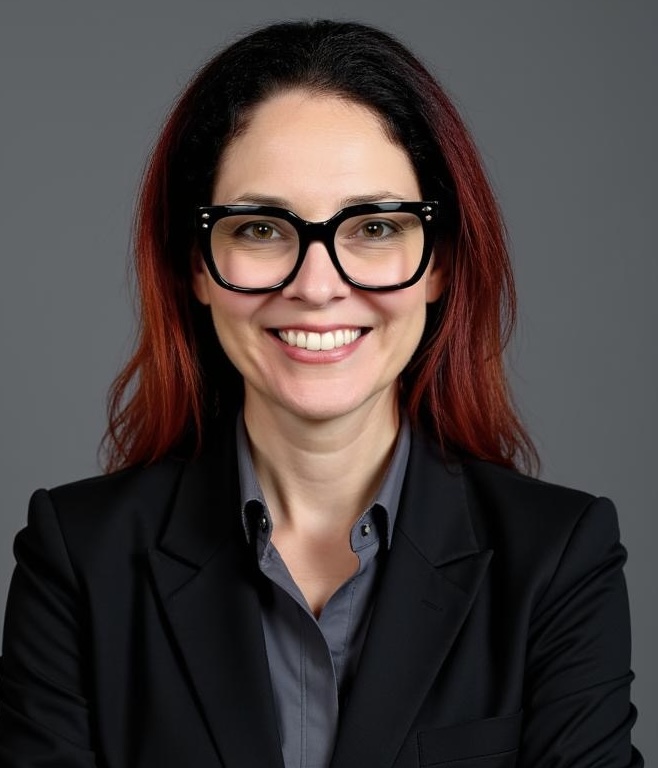
A woman with long dark hair and red highlights, wearing large black glasses, a dark blazer, and a gray shirt, smiles in front of a plain gray background.

Angela Torres, PhD, ABPP

Angela Torres, PhD, ABPP is the Chief Forensic Officer for the Department of Forensic Services at the Virginia Department of Behavioral Health and Developmental Services. In this role, she manages forensic services at the state hospitals, the DBHDS portion of the sexually violent predator program, juvenile justice and behavioral health initiatives, the juvenile competence restoration program, the forensic evaluation oversight system, jail diversion programming, and other state-wide initiatives at the intersection of behavioral health and justice. Dr. Torres is board certified in forensic psychology by the American Board of Professional Psychology. Prior to her current position, Dr. Torres was the Chief Forensic Coordinator at Central State Hospital, the Region IV Jail Team Supervisor, and the DBHDS Forensic Evaluation Oversight Manager. She has experience completing various forensic evaluations in Texas, Virginia, and the Federal system. She is involved in legislation and policy development regarding mental health and criminal justice. Dr. Torres lectures on behalf of DBHDS and the University of Virginia’s Institute of Law, Psychiatry and Public Policy, and routinely collaborates with the ILPPP on research projects addressing Virginia’s forensic services and the practice of forensic evaluations. She is also the Vice Chair of the Forensic Executive Council for NASMHPD and serves on various behavioral health and justice workgroups on the state and national levels.

Presentation(s): 

Community Based Competency Restoration

Nia Estes, MEd

Nia Estes, M.Ed.: Nia Estes is the Healthy Youth Coordinator for the Adolescent and School Health Program (ASHP) at the Missouri Department of Health and Senior Services (MODHSS). Nia is transitioning from higher education to focus on the well-being of younger audiences. Nia collaborates with Missouri School Districts, local public health agencies, and partner organizations statewide, fostering well-being among youth and adolescents

Presentation(s): 

“Said No Teen Ever”—Beginning the Hard Conversations with Youth

Dr. Amberly Pritchard, MA, DBH, LPC, CCTP, NCC

Dr. Amberly Pritchard is a Doctor of Behavioral Health, board-certified licensed professional counselor, and certified trauma professional. Dr. Pritchard earned her doctorate from Freed-Hardeman University, a master’s degree in counseling from University of Alabama, and a bachelor’s degree from Southeast Missouri State University. She has been practicing in the mental health field for approximately 15 years. She has worked in community mental health, grant positions for the state, and integrated care. For the last six years, Dr. Pritchard has been a medical provider for SEMO Health Network. She serves the primary care clinics in Pemiscot, Dunklin, and New Madrid Counties in the Missouri Bootheel. She provides individual and family psychotherapy, medication recommendations, crisis intervention, and behavioral health consultation. Dr. Pritchard utilizes Solution-Focused Therapy, Cognitive-Behavioral Therapy, and Somatic Therapy approaches.
Dr. Pritchard was the first college graduate in her family. She is the only member to earn a doctoral degree. She was raised by a single mother who did not receive her GED until 44 years old. Her mother instilled in Dr. Pritchard the importance of education and success. The day of her pinning ceremony she received a call from her uncle. He said, “You are a legend. Do not forget it.” She celebrated her 10-year wedding anniversary this year. She and her husband have four beautiful children. They love to spend their time on the lake during the summer and in the woods during the colder months. It is a chaotic, busy life. Dr. Pritchard feels blessed beyond measure.

Presentation(s): 

Adult Intimate Partner Violence: How Practitioners in Medical Settings Feel About Breaching Confidentiality

Roy Farmer, CPS

Roy Farmer is a Certified Peer Support Specialist with Landmark Recovery, where he has spent the past four years supporting individuals navigating substance use and recovery. Drawing on both professional and lived experience, Roy specializes in building trust, supporting reentry, and connecting individuals to community-based recovery resources.
An integral part of Roy’s personal recovery journey was graduating from the ICTS Program, where he now helps manage the recovery house and supports current residents. He also serves as a peer support provider for a treatment court caseload, working closely with individuals involved in the justice system.
Roy is passionate about meeting people where they are and empowering individuals to build sustainable, long-term recovery.

Presentation(s): 

When Recovery Support Services Meet the Justice System

Jerica Bowman, MSW, LMSW

Jerica Bowman, Licensed Master Social Worker, serves as the Director of Landmark Recovery, a nonprofit she helped found in 2021. Landmark provides recovery support services for substance-involved individuals in the Jefferson City area. Jerica is also the founder of the Capital City Recovery Coalition, which unites local agencies serving individuals impacted by substance use. As a social worker, Jerica is passionate about advocacy and research to implement evidence-based best practices. She is also dedicated to amplifying the voices of Peer Support Specialists, whose lived experience brings invaluable insight to the recovery field.

Presentation(s): 

When Recovery Support Services Meet the Justice System

Elaine Kochanowicz, BA

Elaine Kochanowicz is a wife, a mother of six, and someone who firmly believes laughter is sometimes the most underrated survival skill. She homeschooled her children for 15 years, started a homeschool co-op that grew to 150 families, finished four triathlons, ate a lot of chocolate and survived loads of laundry!
Today she co-owns BridgeCom Systems with her husband — a company ranked three years in a row on the INC 5000 list of fastest-growing companies in America. But behind the growth charts and achievements is a woman who understands pressure, burnout, and the art of holding it all together with duct tape and determination.
She is a motivational speaker, podcaster, and the author of Mom of Six Dies Laughing — a reminder that sometimes the bravest thing we can do is keep showing up… and keep laughing.

Presentation(s): 

Duct Tape & Determination: The Power of Small Wins

System of Care in Missouri

Room: Paradise A

Speaker(s): 

JJ Gossrau, LCSW

Cla Stearns, PhD

Annie Foncannon

Presentation: System of Care (SOC) is a comprehensive spectrum of effective services and supports for children, youth, and young adults with or at risk for mental health or other challenges and their families that is organized into a coordinated network of care. SOC Teams include a diverse array of community providers and partners, including family members and youth. All SOC Teams across Missouri work towards achieving the SOC core values and guiding principles. This presentation will provide an in-depth look at SOC, describe Missouri’s expansion efforts, identify key resources, and provide examples of why SOC is necessary. This presntation is interactive and will give audience members an opportunity to ask questions, have dialog with presenters, and other audience members. As a result, audience members will have a better understanding of how they can get involved and why they would want to connect with their local SOC team.

Objectives:

  • Discuss rates of mental health challenges for children are increasing
  • Review SOC core values and guiding principles
  • Describe why and how to get involved in local SOC team efforts

Slides and Handouts:


Finding Joy in the Workplace: Ethical Considerations in Addressing Trauma-Related Employment Stress (TRES) Part 2

Room: Paradise B

Speaker(s): 

Terri Cooley-Bennett, DSW

Presentation: Vicarious trauma can negatively impact practitioners, clients, colleagues, supervisors, and entire organizations. In recent years, the American Psychological Association (APA) and the National Association of Social Workers (NASW) have updated their professional codes of ethics to include self-care as an ethical responsibility. The Missouri Credentialing Board (MCB) addresses self-care and impairment within its ethical codes. Vicarious trauma is termed by Van der Merwe as trauma related employment stress (TRES).

This workshop will examine Vicarious Trauma and what the research indicates. Causes, prevalence, consequences, and prevention will be discussed with an emphasis on self-care practices. Part 1 will focus on the research, causes, prevalence, and consequences, while Part 2 will focus on prevention and self-
care.

Objectives:

  • Examine the research and enhance understanding of the different aspects of Vicarious Trauma
  • Describe ethical approaches for managing Vicarious Trauma
  • Identify prevention techniques and evidence-based self-care practices

Slides and Handouts:


Trauma Informed Care for Supervisors

Room: Paradise C

Speaker(s): 

Le’Anne Schlotzhauer, BS

Presentation: This presentation provides a structured overview of trauma-informed care principles tailored for supporting individuals with intellectual and developmental disabilities (IDD). It explains what trauma is, how it uniquely impacts people with IDD, and practical ways staff can apply these principles in daily care.

Objectives:

  • Describe the core principles of Trauma Informed Care
  • Define Trauma in the IDD context
  • Discuss Trauma Informed Supervision Principles

Slides and Handouts:


Improving Care for People with Complex Needs: Real Solutions That Make a Difference

Room: Nautical Wheeler

Speaker(s): 

Dana Silverblatt, MA

Kathleen Murray, MS

Presentation: Millions of Americans are living with complex health-related and social needs, characterized by combinations of chronic illness, functional impairments, mental illness, housing instability, and inadequate social support. As these individuals experience impairments that are cyclical, they often endure further chronic issues, such as food insecurity or ongoing homelessness. This makes receiving adequate support especially challenging, and they frequently enter multiple systems such as health care, social service, behavioral health, law enforcement, courts, housing, and others. Many of these individuals turn toward hospital emergency departments (EDs), which are intended to address acute physical health concerns episodically. Due to the long-lasting and progressive nature of the needs of patients with complex needs, they often leave EDs without having their needs fully met. People with complex needs who frequently utilize hospitals and other systems experience fragmented care and poorer outcomes due to a lack of coordinated, integrated services within their regions. In the St. Louis region, organizations and leaders in healthcare coordination have begun to address this issue in our own community. During this presentation, you will learn about the complexity of this populations needs and solutions with proven results. You will get an in-depth look into two local programs, Hospital to Housing (H2H) and Building Engagement to Address Complex Needs (BEACN), that are using national best practices to improve outcomes for individuals and reduce preventable and costly hospital utilization. You will also learn about the planning and coordination for a complex care model underway that aims to draw lessons learned from the existing programs for a regionwide approach, including opportunities for local and state systems, behavioral health providers, housing supports, advocacy groups, and funders.

Objectives:

  • Identify best practice components of a complex care model
  • Identify at least 3 outcomes/metrics core to St. Louis area complex care programs
  • Describe challenges and opportunities for improving lives of people living with complex health and behavioral health conditions

Slides and Handouts: