Quitting vs. Thriving: Flipping the Script on Alcohol Reduction Education

Room: Paradise A

Speaker(s):

Fred Rottnek, MD

Presentation: Flipping the Script on Alcohol Reduction Education is an interactive session that reframes alcohol counseling around health gains rather than deprivation. Participants will explore concrete health benefits of cutting back, learn how even small reductions in drinking improve well-being, and practice asking patients about their own goals for change. The session will also highlight practical strategies and medications that clinicians can implement to support patients reduce alcohol use in a patient-centered, collaborative way.

Objectives:

  • Identify specific health benefits of reducing alcohol consumption
  • Discuss that any reduction in drinking provides health benefits
  • Ask individuals about their goals in changing their alcohol
  • Implement or support medications to reduce alcohol use

Slides and Handouts:


Legalization of Sports Betting in Missouri—Now What? Clinical Perspectives on Gambling Disorder

Room: Paradise B

Speaker(s): 

Jeremiah Weinstock, PhD, ABPP

Presentation: Gambling opportunities are rapidly expanding across the United States with many states legalizing sports betting, online gambling, and casinos. Gambling disorder affects about 2% of the general population. These individuals, their families, and communities experience significant harm due to their maladaptive gambling behavior. This workshop will review gambling disorder and its causes, identify high-risk populations, and discuss evidenced-based treatment options for individuals and families. Case studies of sports betters will be used as part of an active learning component of the presentation.

Objectives:

  • Describe the gambling disorder criteria and how they are similar and dissimilar to the criteria for substance use disorders.
  • Identify two populations that are at a higher risk of developing the disorder and identify at least two underlying factors to contribute to this increased risk
  • Discuss how research findings about motivational interviewing and cognitive behavioral therapy generalize to clinical practice

Slides and Handouts:


Presence is Power: The Fearless Leader’s Secret Weapon

Room: Paradise C

Speaker(s): 

Stacy Spradling, PHR

Presentation: Leadership today requires more than strategy and execution. Good leadership calls for presence. In this 45-minute breakout session, we go beyond the basics of active listening and body language to explore what it truly means to be a fearless leader through the power of practiced presence.

Presence isn’t about slowing down, it’s about showing up.
The impact doesn’t end at the office. Practicing presence enhances your personal life, deepens connections, and sharpens clarity. It won’t make tough conversations easy, but it will make you the kind of leader who brings calm, courage, and clarity into every room.
If you’re ready to lead with more humanity and more impact, this is your quick dive into the art and science of practicing presence.

Objectives:

  • Describe how grounded, intentional presence can be a quiet game changer in the boardroom, during performance reviews, and in difficult conversations
  • Practice some simple grounding techniques to jump start your journey
  • Discover how presence creates space for vulnerability, gentleness, and authenticity. All qualities that transform how you lead and how your teams respond

Slides and Handouts:


Breaking Free! Breaking Through Barriers to Live Life to the Fullest

Room: Nautical Wheeler

Speaker(s): 

Tracy Tackett, MEd, LPC

Presentation: This presentation will address all the barriers that can hold people back in life from reaching their full potential including impact of past trauma or adverse life experiences, mental illness, and substance use. Education will be provided about ways to break through barriers including various types of therapies.

Objectives:

  • Identify barriers that keep people from progressing in life
  • Discuss impact of past trauma or adverse life experiences
  • Describe about impact of mental illness
  • Learn about impact of substance use
  • Identify strategies to break through barriers that impede personal growth

Slides and Handouts:


Strengthening Suicide Prevention Systems: Data, Crisis Response, and Youth-Focused Strategies Within the Zero Suicide Framework

Room: Paradise A

Speaker(s): 

Nicole McWilliams, MA, PLPC

Kristin Fanning, LPC, CPHQ

Drew Moffett, BS, CCJP, SQP

Michelle Horvath, MA, LPC

Presentation: Suicide prevention requires a comprehensive, systemwide approach that is proactive rather than reactive. The Zero Suicide framework provides organizations with the structure to build safer, more effective care pathways for individuals at risk. This panel will bring together experts in quality improvement, statewide crisis operations, and youth suicide prevention to explore how multi‑departmental collaboration can operationalize Zero Suicide principles with measurable impact. Presenters will discuss how to leverage data to identify gaps and drive continuous improvement, how 988 and crisis service lines integrate Zero Suicide practices in real-time interventions, and how youth‑focused initiatives build protective environments through schools and family partnerships. Participants will leave with actionable strategies and examples of systemwide coordination that strengthens safety nets across the continuum of care.

Objectives:

  • Describe how Zero Suicide core elements can be applied within diverse behavioral health and crisis service settings.
  • Identify key data sources and metrics that support effective suicide care pathways and quality improvement.
  • Explain how 988 and ACI services integrate Zero Suicide principles during crisis response, follow-up care, and transitions.
  • Apply youth-specific suicide prevention approaches that engage schools, families, and community supports.

Slides and Handouts:


Inside Eating Disorders: Risks, Realities, and Solutions for Underserved Clients

Room: Windgate 62-63

Speaker(s): 

Jennifer Copeland, PsyD

Cassidy Richards, MSW

Presentation: Eating disorders are the second deadliest mental illness in the United States, affecting 28.8 million Americans and more than 600,000 Missourians over the course of their lives. Despite the high prevalence, 96% of individuals with eating disorders encounter substantial barriers to accessing effective treatment, creating a critical public health crisis. These barriers are especially pronounced for individuals in low income and rural communities, which make up a significant portion of Missouri’s population. Additionally, most professional training programs provide limited education on eating disorders, further widening treatment gaps across the state. This presentation will offer a clear overview of eating disorders, associated medical and psychological risks, and the markedly elevated suicide risk within this population. Participants will leave with practical, evidence informed strategies for supporting under resourced individuals with eating disorders and improving access to effective care.

Objectives:

  • Describe at least 2 stereotypes about people with eating disorders that are relevant to Missouri communities
  • Apply at least 2 strategies to provide more effective care for under-resourced clients
  • Identify at least 2 resources to utilize in improving care for clients with eating disorders

Slides and Handouts:


Introduction to Competency to Proceed

Room: Windgate 60-61

Speaker(s): 

Tim Wilson, PsyD

Presentation: Introduction to Competency to Proceed will address foundational and modern case law relevant to criminal proceedings involving mental illness. This presentation will provide an overview of Missouri’s competency to proceed statutory requirements, and the evaluation process. Pertinent competency issues and case examples will be discussed.

Objectives: 

  • Understanding the meaning of competency to proceed.
  • Familiar with foundational and modern case law.
  • Understanding Missouri’s competency to proceed statute and evaluation process.
  • Recognizing the associated outcomes of a competency to proceed evaluation.

Slides and Handouts:


2026 DMH Awards

Room: Paradise Ballroom

2026 Spring Training Institute Outstanding Performer Awards 


The Department of Mental Health, Division of Behavioral Health, is recognizing two categories of Outstanding Performers this year: Recovery Support Services and Supported Employment.  These awards go to agencies that exemplify the DMH Mission of serving, empowering and supporting Missourians to live their best lives. 


The 2026 Outstanding Performer Award for Recovery Support Services is Amethyst Place. 

Outstanding Performer for Recovery Support Services is awarded to an organization whose work is transforming lives not just for today, but for generations to come. 

Amethyst Place is a long-term supportive housing program in Kansas City that provides safe, fully furnished homes across 69 apartments for mothers in recovery and their children, offering stability without a time limit so families can heal at their own pace. With an on-site pantry, childcare, and teen-centered programming, the organization creates a supportive environment where families can truly rebuild. Grounded in a two-generation, family-centered model, Amethyst Place recognizes that substance use, poverty, and trauma impact both mothers and their children, and addresses these challenges together through on-site therapy, parenting and life-skills education, and career development support—because they believe it costs more to do nothing, and they have chosen to change that. 

For 25 years, Amethyst Place has been a national leader in long-term, transformational care—allowing families to stay as long as needed, with an average length of stay of 28 months. Its outcomes are powerful: 90% of graduates since 2020 remain stably housed, 95% of children in out-of-home placement are reunified with their mothers—far exceeding the national average—and 88% of women are employed, in school, or both, up from just 40% at intake. Through this comprehensive and compassionate approach, Amethyst Place is not only helping families recover, but empowering them to build resilient, stable, and independent futures. 

Please join me in recognizing and celebrating the extraordinary impact of Amethyst Place and their unwavering commitment to strengthening families and communities. 


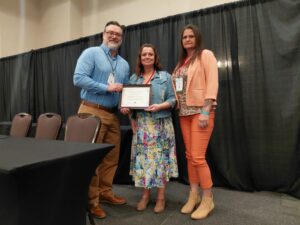
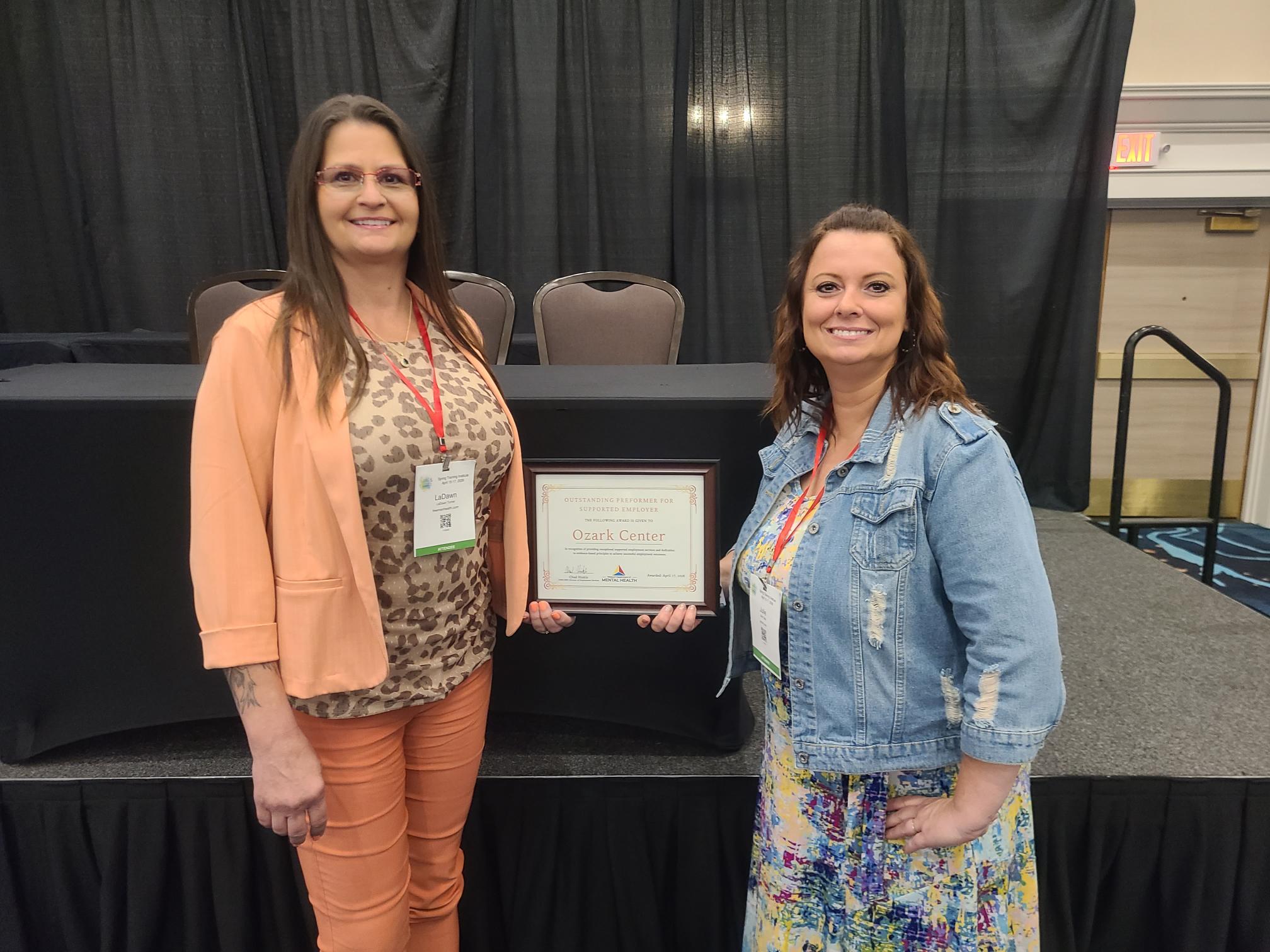
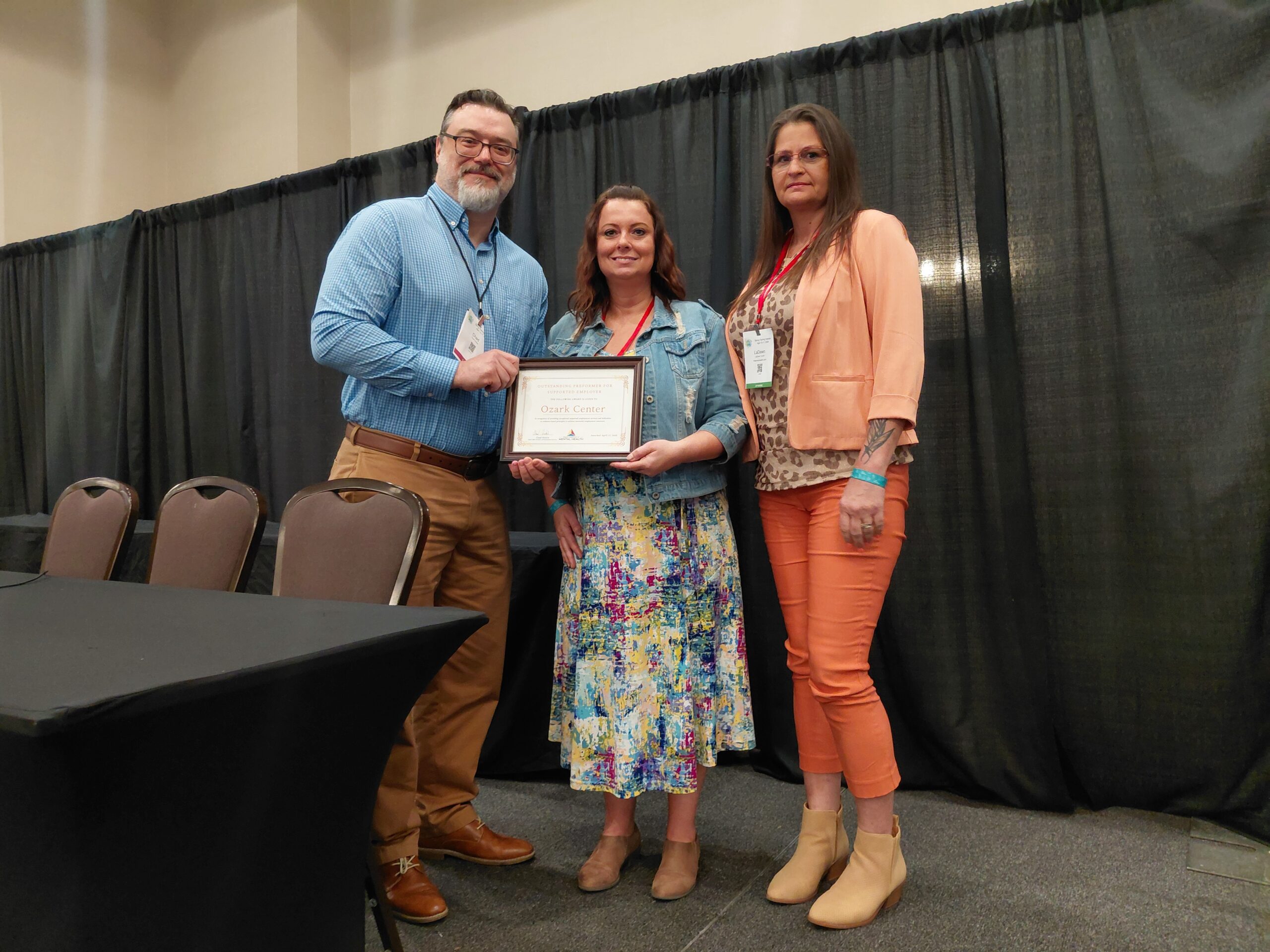
The 2026 Outstanding Performer Awardee for Supported Employment is Ozark Center. 

Ozark Center has demonstrated strong adherence to the evidence-based practice of supported employment known as Individual Placement and Support (IPS). At their most recent IPS fidelity review, Ozark Center scored in the exemplary range of fidelity. While commitment to the fidelity model is essential, Ozark Center also has some of the highest employment outcomes in the state.  They overcame staffing challenges to continue to provide excellent supported employment services. They understand the profound impact employment has on an individual’s recovery.  They exhibit innovative practices, such as having their IPS employment program located near their Clubhouse program, which enhances integration within their agency and increases referrals and offer employment to those who may not have considered it previously. 

A successful employment program must have strong collaboration among a diverse group of partners including the Division of Behavioral Health, Vocational Rehabilitation, and community employers. Along with recognizing Ozark Center, we want to acknowledge the outstanding contributions of their Vocational Rehabilitation partners including Kierstan Shamhart. Their steadfast support of IPS is a major factor contributing to Ozark Center’s prosperity. The Vocational Rehabilitation partners had this to say about Ozark Center: “Ozark Center continues to push forward and develop strategies and processes to ensure that the supported employment services are being provided to the clients they serve through IPS. Ozark Center’s team aspect is one that is inviting, encouraging, and supportive. Their work in creative employment placements, supports through the process of gaining and maintaining employment, and the integrated efforts of employment throughout Ozark Center as a whole makes the program effective and successful. I am very proud to be a part of the team and to have had the opportunity to work with them over the last 11 years.” 
Two women standing in front of a stage, smiling at the camera. One woman holds a framed certificate that reads Ozark Center. Both are wearing conference badges around their necks. Three people stand together indoors. The man on the left and two women are smiling while the woman in the center holds a certificate. They are standing in front of a black curtain with empty chairs beside them.


Keynote: The Language of Conflict

Room: Paradise Ballroom

Speaker(s): 

Whitney Guison, BA, MA

Presentation: Being able to communicate effectively through conflict requires effort similar to learning a second language. Starting out on that journey requires patience, time, practice and the acceptance that you will never “make it”, you will always have room to grow.

This keynote addresses some of the common pitfalls we face when we are in conflict, and gives practical, actionable alternatives that can put you on a path to improving your communication during and around conflict scenarios. Attendees will be educated, entertained, and most importantly- empowered.
Dedicating ourselves to learn the language of conflict will help us set aside destructive communication habits and build meaningful relationships.

Objectives:

  • Identify the common communication pitfalls we face during conflict
  • Discuss best practices to replace the pitfalls
  • Review appropriate responsibility during conflict

Slides and Handouts:


System of Care in Missouri

Room: Paradise A

Speaker(s): 

JJ Gossrau, LCSW

Cla Stearns, PhD

Annie Foncannon

Presentation: System of Care (SOC) is a comprehensive spectrum of effective services and supports for children, youth, and young adults with or at risk for mental health or other challenges and their families that is organized into a coordinated network of care. SOC Teams include a diverse array of community providers and partners, including family members and youth. All SOC Teams across Missouri work towards achieving the SOC core values and guiding principles. This presentation will provide an in-depth look at SOC, describe Missouri’s expansion efforts, identify key resources, and provide examples of why SOC is necessary. This presntation is interactive and will give audience members an opportunity to ask questions, have dialog with presenters, and other audience members. As a result, audience members will have a better understanding of how they can get involved and why they would want to connect with their local SOC team.

Objectives:

  • Discuss rates of mental health challenges for children are increasing
  • Review SOC core values and guiding principles
  • Describe why and how to get involved in local SOC team efforts

Slides and Handouts: