Rachel Cramsey, MSW, LCSW

Rachel Cramsey is a Licensed Clinical Social Worker based in Saint Louis, Missouri. Rachel’s career began as an inpatient social worker at Barnes Jewish Hospital. In 2015, Rachel started working with women and families impacted by the criminal justice system. Rachel transitioned into the role of Executive Director at that nonprofit before returning to BJC in 2019. From 2019-2025, Rachel provided therapy to perinatal and post-partum parents and later to students ages pre-K-8th grade. Since September 2025, Rachel has worked as Clinical Community Health Supervisor and now supports therapists on both the embedded and virtual behavioral health teams for St. Louis Children’s Hospital. Outside of work, Rachel enjoys running, spending time with loved ones, traveling, and listening to records.

Presentation(s): 

Through Community Collaboration, St. Louis Children’s Hospital Takes Behavioral Health Beyond Hospital Walls

Tracy Tackett, MEd, LPC

Tracy Tackett is a Licensed Professional Counselor (LPC) with a Master of Education in Guidance and Counseling, through Lincoln University, Jefferson City, MO (2017) and Bachelors of Art in Psychology, through Columbia College, Columbia, MO (2009). Tracy provides integrative treatment services to adults living with severe and persistent mental illness and co-occurring substance use disorders at New Horizons Community Support Services in Jefferson City, MO. Tracy has worked in the mental health field for over 20 years in various capacities including providing direct care to clients in hospital and residential settings, case management services, and counseling services. Tracy is a passionate advocate for trauma-informed care. She incorporates various counseling techniques and therapies to meet individual needs, including cognitive behavior therapy (CBT), dialectical behavior therapy (DBT), and somatic and attachment-focused eye-movement desensitization and reprocessing therapy (S.A.F.E. EMDR).

Presentation(s): 

Trauma-informed Care – Looking for the Story Behind the Behavior/Presenting Issues

Breaking Free! Breaking Through Barriers to Live Life to the Fullest

Mike Abrams, MSW

Mike Abrams is a social worker and the Young Adults Supervisor at Independence Center, where he leads the Coordinated Specialty Care for First Episode Psychosis (CSC-FEP) program. With over a decade of experience in social services and mental health, Mike has guided programs ranging from mentoring initiatives to data-driven partnerships with United Way.
At Independence Center, his leadership of the CSC-FEP program has built a culture of teamwork, collaboration, and humility—helping young adults improve their quality of life and achieve their goals. Mike also helped forge a partnership between the CSC-FEP team and the Clubhouse at Independence Center to reduce social isolation and strengthen members’ sense of belonging. He looks forward to sharing how these teams work together to support members and achieve shared success.

Presentation(s): 

Clubhouse: A Natural Community Connection for Young Adults with Early Psychosis


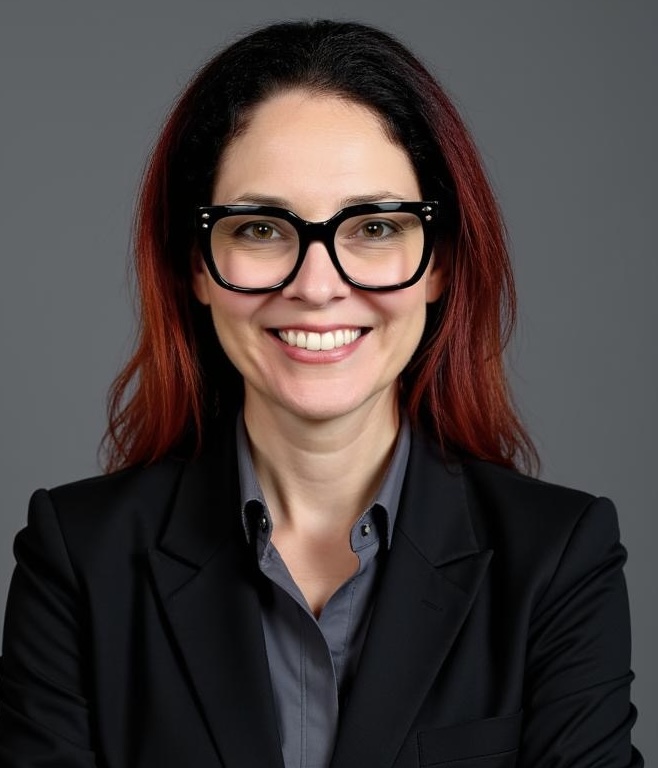
A woman with long dark hair and red highlights, wearing large black glasses, a dark blazer, and a gray shirt, smiles in front of a plain gray background.

Angela Torres, PhD, ABPP

Angela Torres, PhD, ABPP is the Chief Forensic Officer for the Department of Forensic Services at the Virginia Department of Behavioral Health and Developmental Services. In this role, she manages forensic services at the state hospitals, the DBHDS portion of the sexually violent predator program, juvenile justice and behavioral health initiatives, the juvenile competence restoration program, the forensic evaluation oversight system, jail diversion programming, and other state-wide initiatives at the intersection of behavioral health and justice. Dr. Torres is board certified in forensic psychology by the American Board of Professional Psychology. Prior to her current position, Dr. Torres was the Chief Forensic Coordinator at Central State Hospital, the Region IV Jail Team Supervisor, and the DBHDS Forensic Evaluation Oversight Manager. She has experience completing various forensic evaluations in Texas, Virginia, and the Federal system. She is involved in legislation and policy development regarding mental health and criminal justice. Dr. Torres lectures on behalf of DBHDS and the University of Virginia’s Institute of Law, Psychiatry and Public Policy, and routinely collaborates with the ILPPP on research projects addressing Virginia’s forensic services and the practice of forensic evaluations. She is also the Vice Chair of the Forensic Executive Council for NASMHPD and serves on various behavioral health and justice workgroups on the state and national levels.

Presentation(s): 

Community Based Competency Restoration

Through Community Collaboration, St. Louis Children’s Hospital Takes Behavioral Health Beyond Hospital Walls

Room: Paradise A

Speaker(s): 

Rachel Cramsey, MSW, LCSW

Presentation: According to the State of Mental Health in America report, youth mental health saw progress between 2023 and 2024. There is, however, an overarching need for providers to increase access to mental health treatment, especially where barriers to treatment are more prevalent. Many youth experiencing depression and other mental health concerns lack access to therapy due to obstacles including, but not limited to, stigma, transportation, finances, and childcare. St. Louis Children’s Hospital (SLCH), a Level 1 Trauma Center for Illinois and Missouri, serves children from all 50 states and over 80 countries. Since 2018, SLCH has worked in partnership with various school districts in the St. Louis area to provide on-site mental health services within the school setting. Starting in 2020, a school-based virtual behavioral health program through St. Louis Children’s Hospital began to also increase mental health access to students and reduce barriers to treatment. This program, known as Healthy Kids, links licensed or provisionally licensed therapists to the school setting.

The partnership SLCH has established with school districts allows therapy providers to become a familiar piece of the school community, meet children where they are, and work with them in a safe environment on various mental health topics. This is done through many forms of funding including the St. Louis Children’s Foundation and a bridge payment program with partner schools. Whether the therapist is embedded or virtual, students have access to free, quality mental health support. Through this partnership, Healthy Kids at St. Louis Children’s Hospital takes mental health care outside the hospital walls and into the community where it’s most needed.

Objectives:

  • Identify and secure funders as key partners for financial sustainability
  • Identify barriers to child mental health services in Missouri
  • Utilize school partnerships to eliminate barriers to child mental health

Slides and Handouts:


Trauma-informed Care: Looking for the Story Behind the Behavior

Room: Paradise B

Speaker(s): 

Tracy Tackett, MEd, LPC

Presentation: This presentation aims to provide education about trauma-informed care and being mindful that there is a reason and a story behind the presenting problems.

Objectives:

  • Identify what trauma is
  • Identify types of trauma
  • Identify signs and symptoms related to trauma
  • Learn about how to provide trauma-informed care

Slides and Handouts:


Silencing the Pathological Critic: The Mindful Response to Unhealthy Self-Talk

Room: Paradise C

Speaker(s): 

James Smith, MEd, PhD

Presentation: Every person has a healthy self-critic that performs important functions in our lives. For some, that unhealthy self-critic gets sick, becoming the Pathological Critic. The Pathological Critic is that voice that tells us harmful messages about ourselves. Responding to this internal voice effectively is important for our overall mental health. In this presentation, Dr. Smith will discuss what the Pathological Critic is, experiences that promote its developmental, and how to quiet it using foundational Mindfulness principles.

Objectives:

  • Describe the 3 core principles of Mindfulness
  • Review the meaning and origin of the “Pathological Critic”
  • Apply the 3 core principles of Mindfulness to creating effective responses to the Pathological Critic
  • Participants will consider the application of creating Mindfulness-based responses to the Pathological Critic with clients in clinical settings

Slides and Handouts:


Revealing the Hidden Dynamics of Difficult Cases

Room: Nautical Wheeler

Speaker(s): 

John Carpenter, MSW, LCSW

Presentation: Many times a therapist can feel overwhelmed or “stuck” with a complicated case or lack of helpful information to be able to move forward. This presentation will help the clinician see their own case in a completely new way — exposed by experiential techniques, visual displays, props to illustrate psychological impacts, emotional distance, strength of relations, hidden effect of therapist, metaphorical imagery, and actual emotional ages. These experiential approaches will help the therapist as well as the whole audience to see and feel new ideas to help each difficult case. No identifying names or information is necessary.

Objectives:

  • Describe new experiential techniques for assessing client situations
  • Review one’s case in an experiential manner
  • Use visual props to illustrate relationships
  • To learn how a therapist position might be blocking progress
  • To learn how to use this model for supervising staff’s cases

Slides and Handouts:


Clubhouse: A Natural Community Connection for Young Adults with Early Psychosis

Room: Windgate 62-63

Speaker(s): 

Mike Abrams, MSW

Presentation: The Clubhouse model provides a supportive environment that promotes growth, empowerment, and inclusion through shared work, social connection, and opportunities for education and employment. By working with Clubhouses, Coordinated Specialty Care (CSC) Teams can offer a unique opportunity to build meaningful connections, discover purpose, and experience a genuine sense of belonging within their community for the young adults they serve.

This presentation will highlight how Independence Center’s Clubhouse serves as a vibrant community hub, creating spaces where members can connect, contribute, and thrive, and how collaboration with Independence Center’s CSC team strengthens ongoing recovery and wellness. Participants will gain insight into how the Clubhouse model fosters peer support, community engagement, and a strong foundation for long-term well-being, as young adults start, participate in, and graduate from CSC services.

Objectives:

  • Define the Clubhouse model utilized by Clubhouse International and Independence Center
  • Summarize how Independence Center’s CSC and Clubhouse programs work together to achieve shared member outcomes
  • Examine how the unique aspects of the Clubhouse model benefit young adults experiencing early psychosis
  • Connect with Clubhouses in their area to analyze if a partnership will benefit the young people they serve

Slides and Handouts:


Community Based Competency Restoration

Room: Windgate 60-61

Speaker(s): 

Angela Torres, PhD, ABPP

Presentation: This presentation will explore competency to stand trial with a special focus on outpatient or community-based restoration. Attendees will learn the foundations behind competency to stand trial, explore different restoration modalities, and review common issues with restoration and how to address them. This presentation will speak to common myths and stigma about forensic consumers and the important role restoration providers can play in the criminal justice system and in the care of justice-involved clients with serious mental illness. Finally, participants will leave the training with basic guidance about how to proceed with restoration, and recommendations to further build their own professional competence to provide restoration services.

Objectives:

  • Understand the foundation competency to stand trial.
  • Learn the basics of competency restoration, with a special focus on community-based restoration.
  • Understand the role of restoration providers in the continuum of care and the criminal-legal system.
  • Address stigma about common perceptions about forensic consumers.
  • Review strategies to address barriers to community-based restoration.

Slides and Handouts: